Making Hard Landscaping Sing: The Haringey Garden
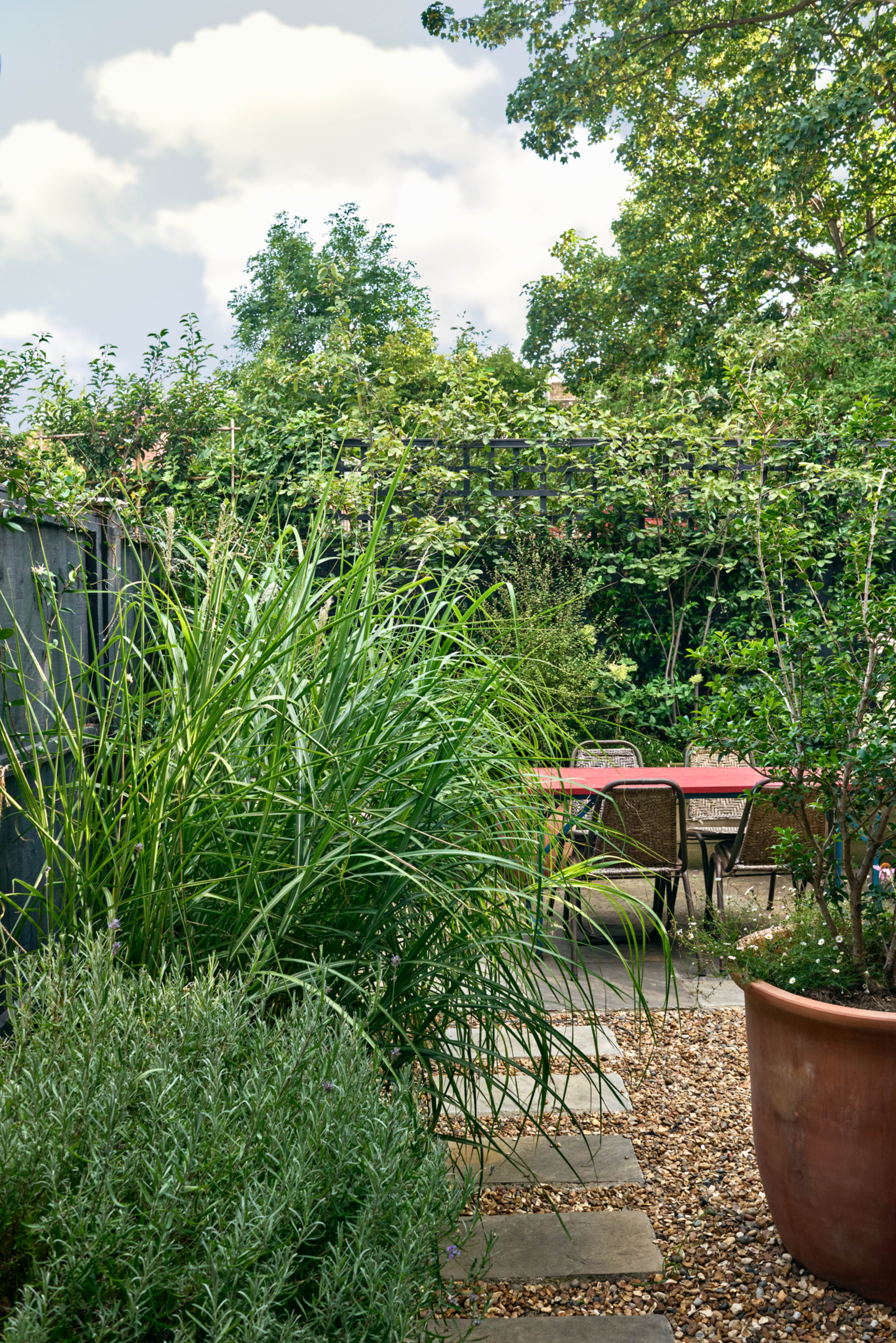
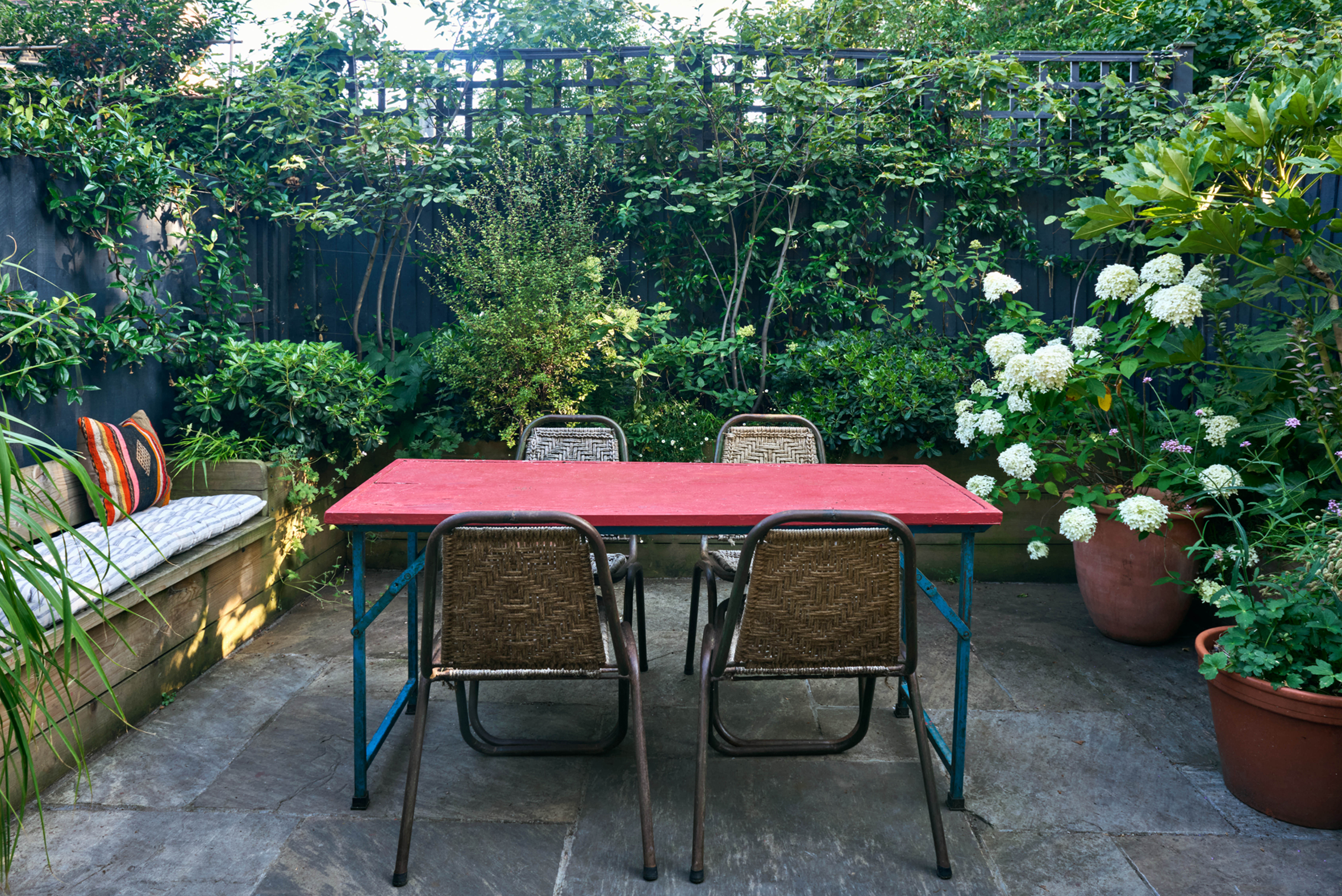
Some gardens start with a blank plot. This one started with a finished one: the hard landscaping was in, the limestone paving and gravel laid, raised sleeper timber beds built and the structure decided, but there was no planting at all. The brief was simple to say and harder to do: soften the space and make it hum with life.
Working into a fixed layout is a different kind of design problem. The bones can't be rearranged, so every decision has to work with what's there rather than against it. The paving, beds and fences set the lines; the planting's job was to blur them, spill over edges and bring movement to a space that was, at that point, all hard surfaces. The dark-painted fences helped. Boundaries that would otherwise draw the eye recede, and foliage reads clearly against them.
Structure first
I started with the trees and shrubs, the permanent structure that carries the garden through winter when everything else has died back. A multi-stem Amelanchier gives height and a light, open canopy that doesn't shade the beds too heavily. It earns its place across the whole year: white blossom in spring alongside bronze-tinged new leaves, small berries in early summer, and strong autumn colour. The early blossom feeds pollinators when little else is flowering, and birds take the berries.
Evergreens went in next. Fatsia japonica anchors the garden with its large, glossy, hand-shaped leaves, a plant that looks as good in January as in July and holds its own against the dark fence. Lower, dense evergreen shrubs give the beds a solid base through winter, with small scented flowers in late spring.
Ferns and grasses followed to fill out the year-round form. Two contrasting ferns take the shadier spots, one upright with finely cut fronds, the other with glossy, strap-shaped evergreen leaves, so texture carries the shade even without flowers. A low japanese forest grass arches softly over the edges of the beds, and a taller one adds height and movement, catching the light and rustling in any breeze.
Layering the perennials
Only once that skeleton was in place did I add the layered perennials for flower and seasonal interest. The aim was a long season and plants that pull their weight for wildlife.
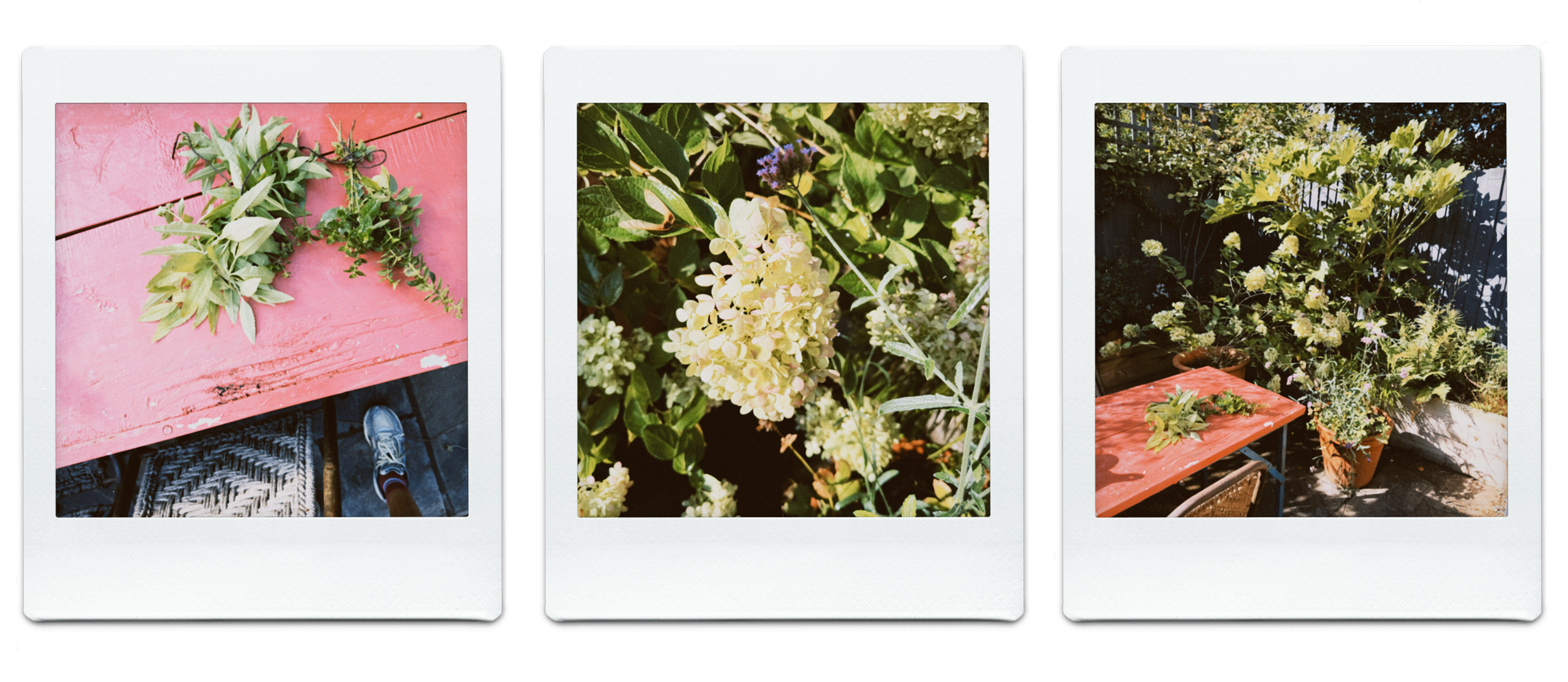
Erigeron karvinskianus does more than any other plant to soften the hard landscaping. Its small daisies, opening white and fading to pink, flower from late spring into autumn, and it self-seeds into cracks in paving and the joints of walls, so over time the planting creeps out of the beds and into the structure itself. Trailing and aromatic herbs spill over the edges of the raised beds, blurring the timber and bringing scent and a steady stream of bees through summer.
Soft pinks run through the middle layer, from low, long-flowering ground cover to taller, see-through flowers on wiry stems that don't block the view. Late summer belongs to tall white flowers that carry the garden into autumn.
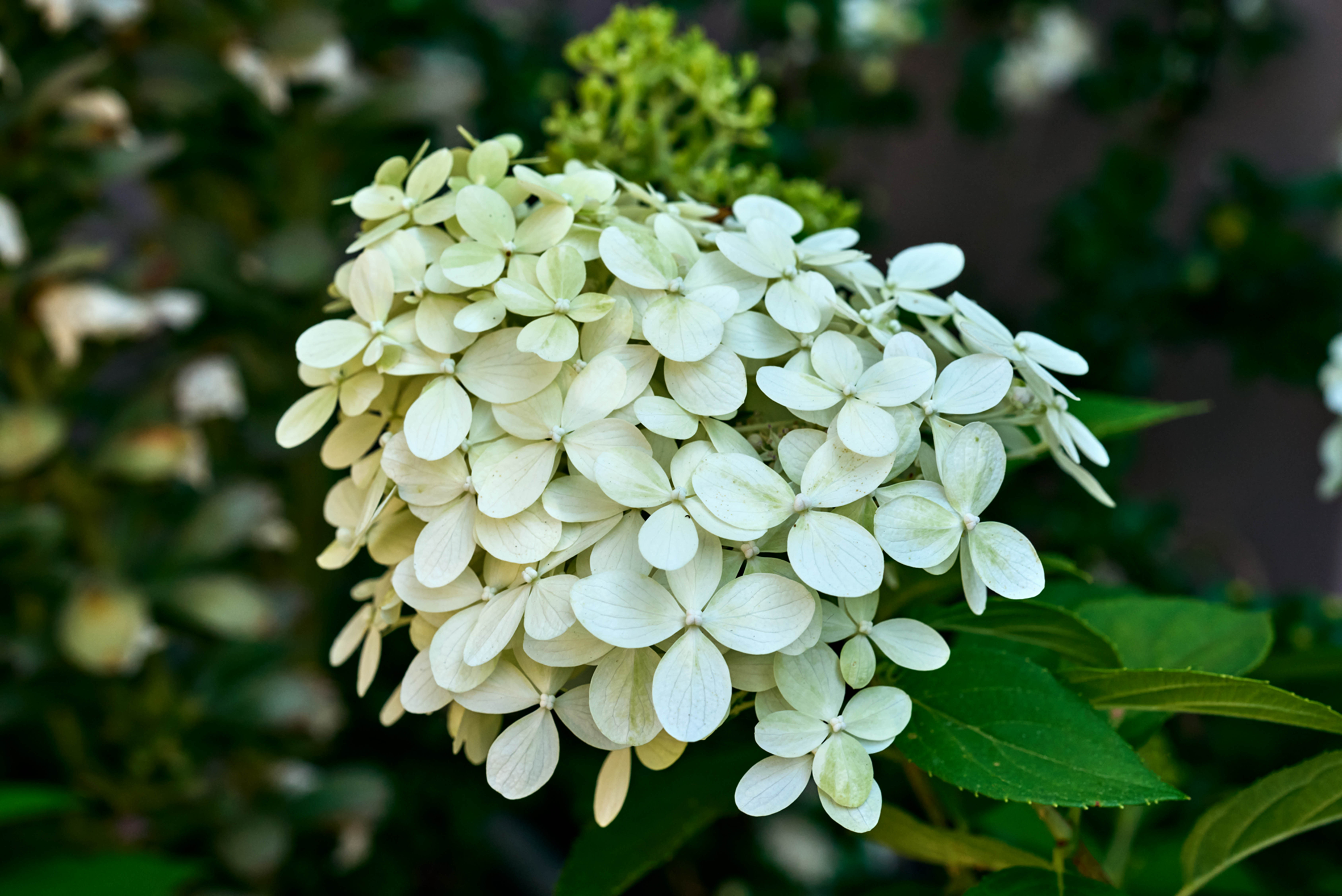
A Hydrangea paniculata 'Limelight' taught me something. The one planted in a pot has thrived, its flowers opening lime-green, fading to cream and then pink, and drying on the plant well into winter. Those in the beds did less well and will be swapped out for a less thirsty plant this spring.
An ongoing relationship
The garden is relatively low maintenance by design, but I still visit every two to three weeks to garden, edit and refine the planting. It has improved year on year as the plants have matured and the scheme has been added to.
The main ongoing difficulty is water. Several beds are raised containers, and container plants can't send roots down to find moisture the way plants in open ground can, so drought stress shows up quickly. Part of the answer was built into the original planting, with Mediterranean herbs, drought-tolerant evergreens and self-seeders that cope with dry conditions. Part of it is ongoing: noticing which plants struggle, favouring tougher choices over time, mulching to hold moisture in, and watching closely through dry spells.
It's a good reminder that a garden isn't a single moment of installation but an ongoing relationship, and some of the most important design decisions happen well after the first planting goes in.